

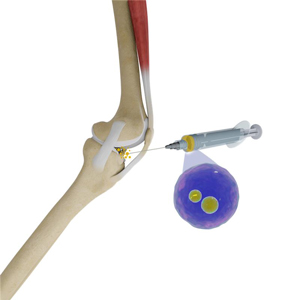
What are Exosomes?
Exosomes are tiny, naturally occurring nanoparticles (about 40–100 nanometers in size) that are secreted by nearly all types of cells in the body. They play a vital role in cell-to-cell communication by transporting molecules such as proteins, lipids, RNA, and DNA between cells.
In orthopedics, exosomes are microscopic extracellular vesicles derived from mesenchymal stem cells (MSCs) - usually taken from bone marrow, adipose (fat) tissue, or umbilical sources. These exosomes carry growth factors, cytokines, and genetic material (RNA and proteins) that promote cell signaling, tissue repair, and anti-inflammatory effects in injured joints, tendons, ligaments, cartilage, and bone. Exosomes are typically delivered via ultrasound-guided injection directly into the affected joint, tendon, or soft tissue.
How Do Exosomes Work in the Musculoskeletal System?
Exosomes help stimulate the body’s own healing mechanisms through:
- Reducing inflammation - by modulating immune cell activity.
- Promoting tissue regeneration - enhancing proliferation and differentiation of local cells (e.g., chondrocytes in cartilage, tenocytes in tendons).
- Inhibiting fibrosis and scar formation.
- Stimulating angiogenesis (formation of new blood vessels), improving tissue oxygenation, and nutrient supply.
- Protecting cells from apoptosis (cell death) after injury.
When are Exosomes in Orthopedics Recommended?
Exosome therapy in orthopedics is recommended when a patient has musculoskeletal injuries or degenerative conditions that have not improved with conservative treatments such as rest, physical therapy, or medications. It is commonly considered for:
- Osteoarthritis of the joints, such as the knee, hip, or shoulder to reduce pain and inflammation and promote cartilage regeneration.
- Tendon and ligament injuries such as rotator cuff tears, Achilles tendinopathy, and lateral epicondylitis (tennis elbow).
- Bone healing after fractures or delayed union.
- Post-surgical healing to accelerate recovery and reduce scar tissue formation.
- Sports injuries as a regenerative, non-surgical option to restore function.
In short, exosomes are recommended for patients seeking a non-surgical, regenerative option to restore function, reduce inflammation, and promote natural tissue healing.
What Does the Procedure for Exosomes in Orthopedics Involve?
The procedure for exosome therapy in orthopedics is a minimally invasive, biologic treatment designed to promote healing and regeneration in joints, tendons, ligaments, and muscles. It involves injecting exosome-rich solutions - typically derived from stem cells - into injured or degenerative musculoskeletal tissues.
In general, the process of exosomes administration involves the following steps:
- The orthopedic specialist begins with a comprehensive assessment of the patient’s condition. This includes physical examination, review of medical history, and diagnostic imaging such as X-rays, MRI, or ultrasound. The goal is to confirm that the patient is an appropriate candidate for exosome therapy - usually those with degenerative joint disease, tendinopathies, or chronic inflammation.
- Exosomes are obtained from purified mesenchymal stem cell (MSC) cultures, often derived from adipose tissue, bone marrow, or umbilical cord tissue.
- These exosomes are processed and prepared under sterile conditions in a regenerative laboratory.
- The final product is a sterile, concentrated solution containing purified exosomes ready for injection.
- The treatment area (joint, tendon, or soft tissue) is cleaned and sterilized.
- Local anesthesia may be used to numb the site and minimize discomfort.
- The treatment area (joint or soft tissue) is cleansed and sterilized to minimize infection risk.
- The exosomes are injected directly into the target area using ultrasound or fluoroscopic guidance to ensure precise placement.
- The entire injection typically takes 10–20 minutes. Depending on the case, one or multiple injections may be given. The patient can usually walk out immediately afterward.
What Does Post-Procedure Care for Exosomes in Orthopedics Involve?
After the injection, patients are usually advised to rest the treated joint or area for 24–48 hours and avoid strenuous activities for several days. Mild soreness, swelling, or stiffness at the injection site may occur temporarily, which typically resolves on its own. Ice packs can be used to reduce discomfort, but anti-inflammatory medications (like NSAIDs) are generally avoided, as they may interfere with the regenerative effects of exosomes. Light stretching or gentle physical therapy may be introduced after a few days to promote mobility and enhance healing. Most individuals can resume normal activities within a few days, with gradual improvement in pain and joint function over the following weeks to months.
What are the Risks of Exosomes in Orthopedics?
Risks of exosomes in orthopedics include the following:
- Mild pain, redness, or swelling at the injection site
- Temporary stiffness or soreness after treatment
- Rare risk of infection or allergic reaction
- Variable results depending on product quality and condition severity
- Limited long-term safety and efficacy data
What are the Benefits of Exosomes in Orthopedics?
Benefits of exosomes in orthopedics include the following:
- Promote tissue regeneration and repair
- Reduce inflammation and pain
- Enhance cartilage, tendon, and ligament healing
- Improve joint mobility and function
- Stimulate natural stem cell activity
- Minimize scar tissue and fibrosis formation
- Support faster recovery after injury or surgery
- Provide a minimally invasive, cell-free treatment option
- Lower risk of immune rejection or complications
- May delay or reduce the need for surgical intervention